Admissions open for
BBA/BCA/B.Com/B.Sc.(CS)/BA in Psychology-2026
BBA/BCA/B.Com/B.Sc.(CS)2026
Why Asian School of Business
is one of the Best Colleges for BBA/BCA/B.Com/B.Sc.(CS) in Delhi-NCR?
 |
Part of Asian Education Group (AEG) |
|
35 years of Excellence in Education |
 |
Awarded as ‘Top Institute of India 2018′ by Competition Success Review |
|
An International Association with Oxford Business College, Oxford & London, U.K. |
|
Strong Industry Connect, 100% Placement Assistance & Internships |
 |
NAAC Accredited, full-time UGC approved degree programs. |
|
40+ highly qualified faculty with benchmark teaching methodologies |
|
Best Education Brand for Industry Interface by Business World(BW) |
|
Upskilling Through Advanced and Specialized Certifications |
|
Collaborative programs imparted in Business Analytics, Social Media Marketing & Web Analytics from NIIT |
GLIMPSES OF THE LATEST STUDY TRIP TO
UNIVERSITY OF SOUTHERN CALIFORNIA – SCHOOL OF CINEMATIC ARTS,
LOS ANGELES, UNITED STATES OF AMERICA!
27th July to 05th August 2025

The 1st ever cohort from ASB is heading to the University of Southern California

Day-1
A Journey Beyond Borders Begins!

Day-2
at University of Southern California

Day-3
Academic Insights & Hollywood Adventures

Day-4
Academic Insights & Hollywood Adventures

Day-5
Learning Beyond the Classroom!

Day-6
A Day of Discovery at USC!

Day-7
Cultural Immersion Through the Streets of Los Angeles

Day-8
Unfolding USC: A Journey Through Film, Athletics & Academia

Day-9 & 10
The Journey Back: Memories Beyond Miles


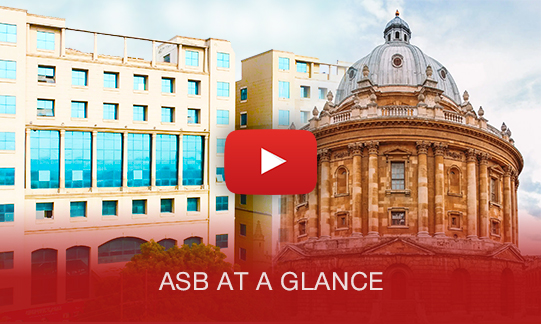
Welcome to Asian School of Business, Noida
Asian School of Business was set up with a vision to promote excellence in education and to meet the amplifying demand for qualified professionals in the field of business management and computer applications. At present, ASB not only offers BBA (General) & BBA (International), but also offers degree programs including BCA (General), BCA (International) and B.Com., B.Sc.(CS) in affiliation with the CCS University. ASB facilitates tailored courses to provide students with an industry-relevant degree.
PROGRAMS
BBA (General/International)

ASB Noida is ranked among the best BBA colleges in Noida. Their specialised programs, BBA (General) and BBA (International), are affiliated with CCS university and offer students with the essentials of business management & corporate functioning. ASB over last 3 years has become one of the best colleges for BBA in Delhi, also the students receive a well-structured education that equips them with all of the skills and expertise to succeed in a highly complex and competitive business environment.
The institute is focused to facilitate practical based learning method through hands-on training sessions, case studies, role plays and integrative class exercises ensuring that students not only learn the fundamentals but are also able to apply those in practicality. To increase the relevance with future employment market including promotion of self-employment, a two pronged initiative -Soft skills and Employability skills, has been made an integral part of skill development under Center for Skill Development (CSD). We believe in providing the best in terms of education and support to ensure our students achieve academic excellence and all-rounded success.
3 Year BBA Degree Program
with University Specialisation in (anyone)
| Marketing |
| Finance |
| Human Resource Management |
| Business Analytics |
| International Business |
| Supply Chain Management |

with Specialization certification in (anyone)
| Artificial Intelligence |
| Entrepreneurship & New Venture Creation |
| Family Business Management |
| Real Estate Management |
with Additional Diplomas and Certifications in:
*International Certification in Personal & Professional Development from O.B.C., Oxford/London, UK
 |
| Social Media Marketing & Business Analytic from NIIT
|
| Media Applications from AAFT
|
| Corporate Communications from CSD |
BCA (General/International)
3 Year BCA Degree Program
with University Specialisation in (anyone)
| Artificial Intelligence & Machine Learning (Using Python) |
| Full Stack Development |
| Data Science |
with Specialization certification in (anyone)
| Cloud Computing & DevOps |
| Cyber Security |
| Project Management |
with Additional Diplomas and Certifications in:
| *International Certification in Personal & Professional Development from O.B.C., Oxford/London, UK
|
| Web Analytics from NIIT
|
| New Media Applications from AAFT
|
| Corporate Communications from CSD |

Bachelor of Computer Applications (BCA) at Asian School of Business is a three years full-time degree course affiliated with CCS University. This course is designed and structured with the intent to provide students a dynamically stimulating environment, where the students can get transformed into highly skilled IT specialists. The curriculum at the best BCA college in Delhi NCR has been designed to give the students an in-depth knowledge of various subjects related to Information Technology.
You are provided with generic and substantial knowledge about the latest developments in design, analysis and implementation of computer software. Realizing the importance of keeping up with technology in the workplace, ASB also offers you additional diplomas in various fields like Cloud Computing, Web Analytics and Digital Marketing in collaboration with NIIT, along with the bachelor’s degree. The Institute is also a member of Computer Society of India (CSI), hence facilitating best mentorship through IT experts all over the country.
Bachelor of Commerce (B.Com)

Bachelor of Commerce (B.Com) at Asian School of Business is a three-year full-time degree program affiliated with CCS University. The objective of this program at ASB is to provide the young students with a basic understanding of finance and commerce-related concepts. ASB Noida is one of the best B.Com colleges in NCR and is capable of producing excellent professionals who can identify and solve finance-related management problems at a later stage.
The objective of this program at ASB is to produce excellent professionals who can translate theory into practice and are capable of identifying and solving finance related management problems at a later stage. The approach towards teaching is more practical where knowledge is imparted for the practical applications in the corporate world.
3 Year B.Com. Degree Program
with Specialization certification in (anyone)
| Financial Markets |
| Banking and Insurance |
| Artificial Intelligence (AI) |
| Entrepreneurship & New Venture Creation |
with Additional Diplomas and Certifications in:
| *International Certification in Personal & Professional Development from O.B.C., Oxford/London, UK
|
| New Media Applications from AAFT
|
| Corporate Communications from CSD |
B.Sc. in Computer Science
3 Year B.Sc.(CS) Degree Program
with Specialization certification in (anyone)
| AI & Machine Learning |
| Back-End Engineering |
| IOT (Internet of Things) |
| Data Science |
with Additional Diplomas and Certifications in:
| *International Certification in Personal & Professional Development from O.B.C., Oxford/London, UK
|
| New Media Applications from AAFT
|
| Corporate Communications from CSD |

Bachelor Of Science (B.Sc.) in Computer Science at Asian School of Business is a three years full time degree course affiliated to CCSU. This course is designed and structured with the intent of providing our students with a dynamically stimulating environment, where they can be transformed into highly skilled IT specialists.
The curriculum has been designed to provide the students an in-depth knowledge of various subjects related to Information Technology and Computer Science along with the basic concepts of mathematics. The objective of B.Sc. (CS) at ASB is to produce outstanding IT professionals who can apply the theoretical knowledge into practice in the real world and develop standalone live projects and research by themselves.


Student Testimonials

DIVYANSH SAJNANI, BCA BATCH 2021-24

SAKSHI PANT, B.COM BATCH 2022

PRIYANSHI SAUBHAGYA, BCA BATCH 2022

KANISHKA KHATTAR, BBA BATCH 2020

ABDUL HANNAN, BBA BATCH 2020

GARGI SACHDEVA, BBA BATCH 2019

HARSHAL SARAOGI, BCA BATCH 2019


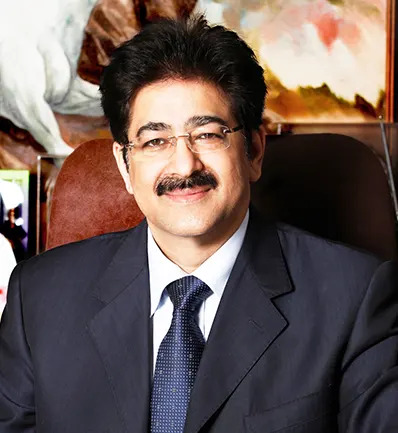
From the
Chairman’s Desk
We at Asian School of Business (ASB) believe that education in business management is not just about management but it is also about how management can improve various other disciplines and functions of which business is comprised of. We also believe in adapting the western education model to suit the socio-economic conditions prevailing in this part of the world. We are aware that with globalization coupled with dismantling of rigid regulatory frameworks across the world, business environment has become very dynamic and the modern day manager must be capable of adapting to the fast changing business environment. We are conscious of the fact that to be at the cutting edge of the business education and training, the B-Schools have to work in partnership not only with the business-houses but also with similar institutions across the world. We try and inculcate in the students the ability to foresee the changing business environment, make innovative plans, implement radical policies as well as take and manage risk in business operations.
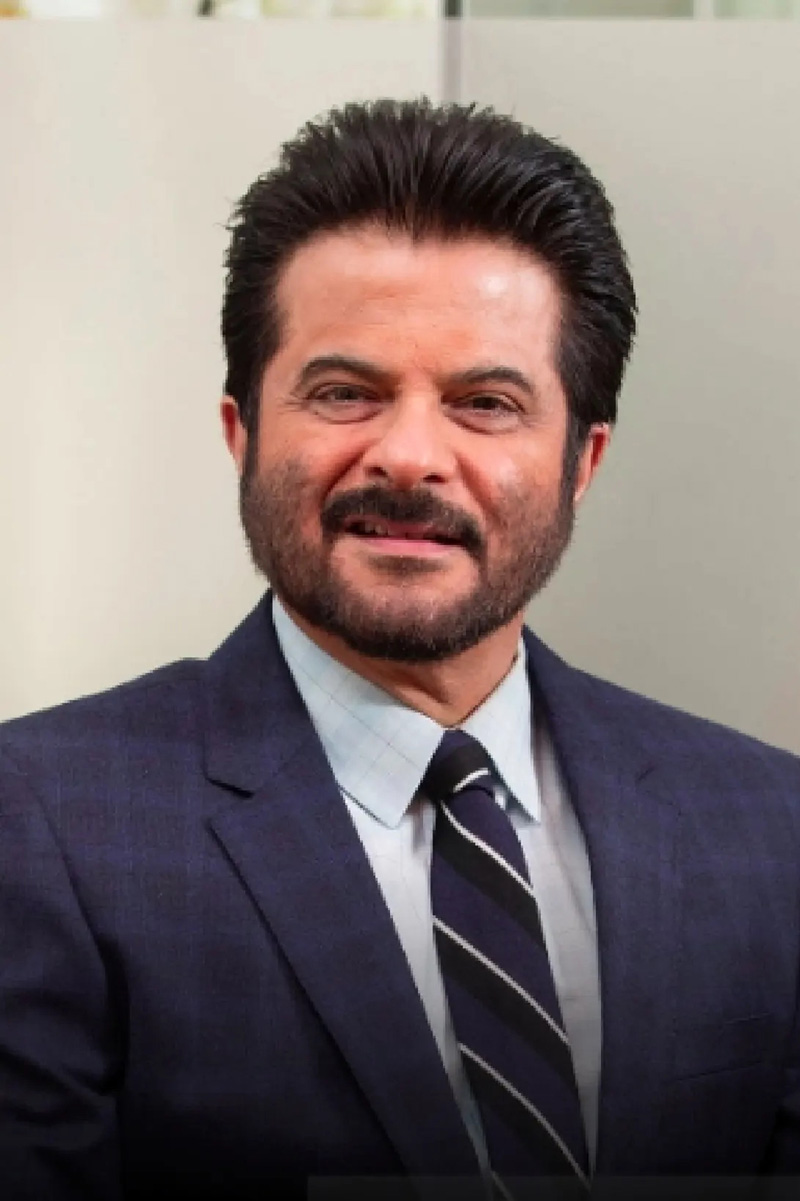
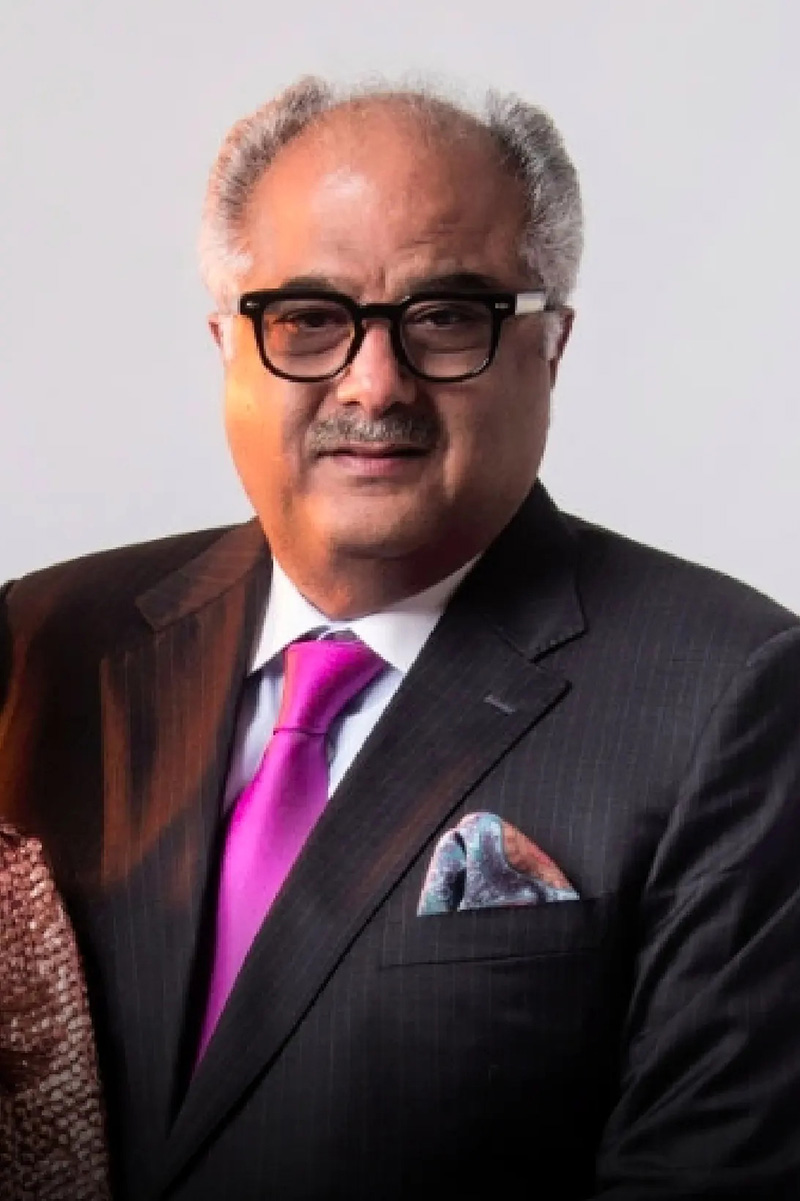
Core Advisory Council

Events Highlights at ASB NOIDA


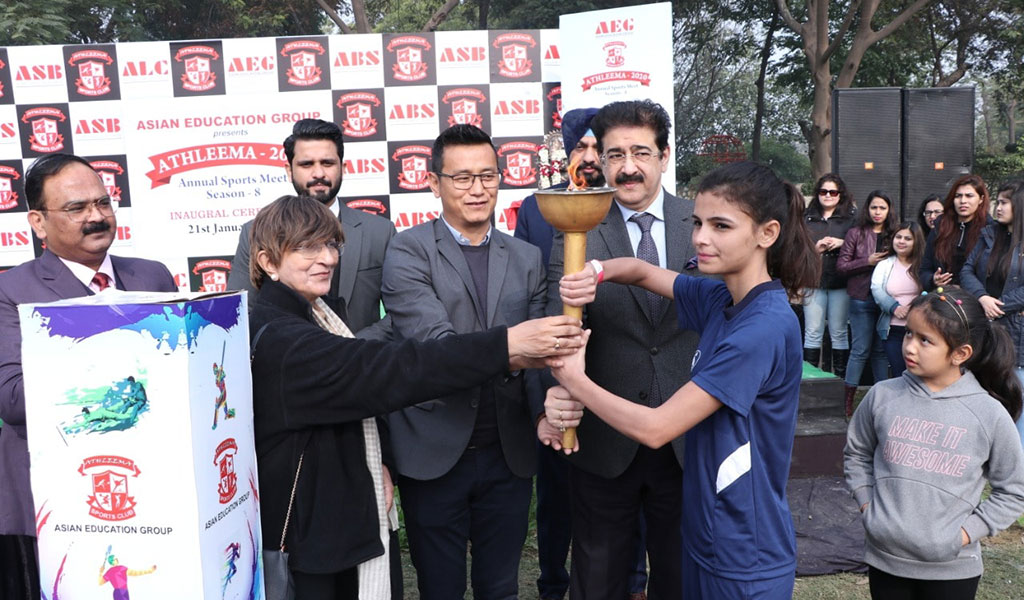
![The Great Khali At [ASB Noida]](https://asb.edu.in/wp-content/uploads/2022/05/athleema-2022.jpg)
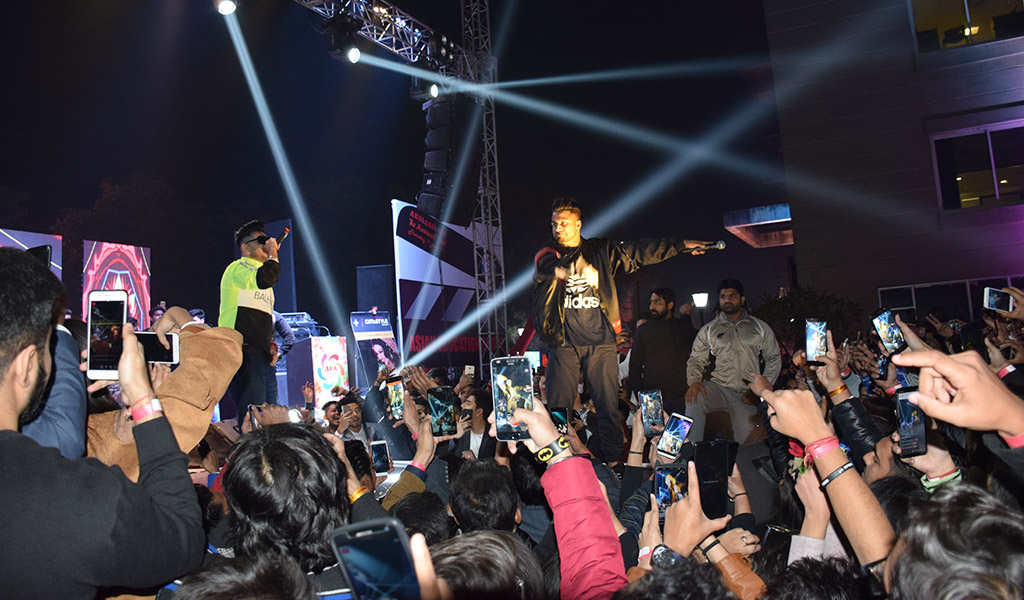
![JazzyB at Asian School of Business Noida [ASB Noida]](https://asb.edu.in/event-at-asb/jazzy-B-at-Asian-School-of-Business-Noida-[asb-noida].jpg)